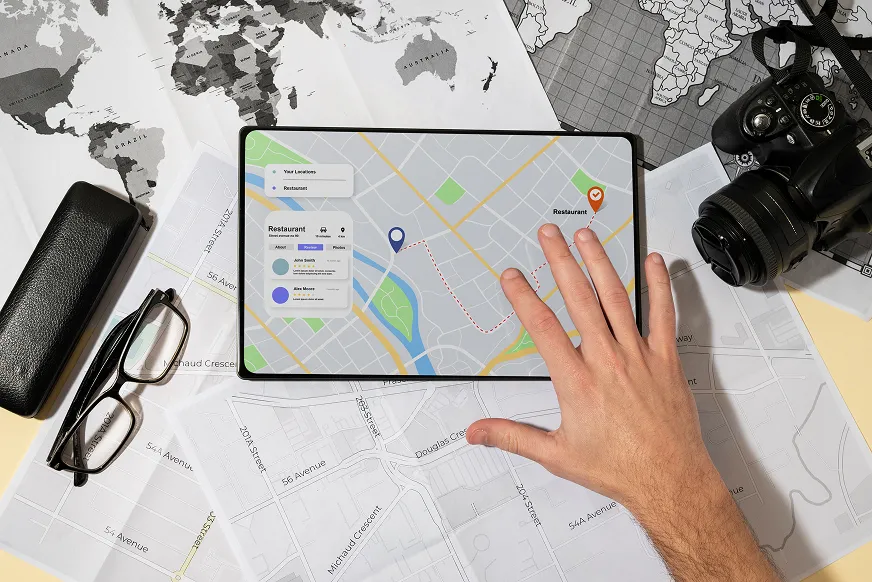
AI redefining routes
In the past, planning logistics routes was a manual process based on static maps and empirical experience. Today, artificial intelligence (AI) has completely transformed this task, turning it into a dynamic, automated, and predictive process. AI algorithms analyze large volumes of information—such as traffic, weather conditions, delivery priorities, and staff availability—to design optimized routes in a matter of seconds. This reduces travel times, minimizes operating costs, and increases the productivity of the field team. In addition, machine learning improves over time: the system learns from each operation, identifying behavior patterns, congestion zones, and high-demand times. The result is a model that constantly evolves and adapts, ensuring the best possible route for each day. Companies that integrate AI into their logistics management not only gain efficiency, but also strategic capacity: they can anticipate needs, simulate scenarios, and make data-driven decisions. In a competitive environment, that difference paves the way for smarter, more sustainable, and more profitable logistics.